
I have just read the poet Jess Mookherjee’s beautiful and sensitive review of Minx for London grip. As a poet, and especially one writing about such personal material, it’s always a pleasure when I hear that Minx has resonated with a reader and Jess just got to the heart of what makes the collection tick. Do read Jess’s review of my memoire in poetry and perhaps play a little Bowie gently in the background when you read my take on the Shackleton Estate of the late 1970’s.
Jun12026
London Grip Poetry Review – Karen Downs-Barton
Poetry review – MINX: Jessica Mookherjee admires Karen Downs-Barton’s ability to see and understand a broken past and then reassemble the fragments
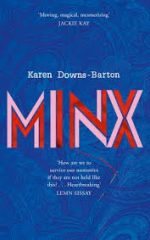
Minx
Karen Downs-Barton
Penguin/ Vintage
ISBN: 978–1–7 8474–5 87–5
96pp £12.99
Karen Downs-Barton writes with a kind of documentary ferocity, but the poems in Minx are not document or memoir. The opening poem, “The Tattooed Door,” is right to risk excess; that’s precisely why it works. Life for the protagonist is not neat, and like the baroque Romani working-class interiors it evokes, Downs-Barton lets it sprawl and overload. The pressure thrilled me.
Beginning with Bowie’s ‘20-foot dream car’ we plunge into a recognisable world of communal bins, mouldy walls, Bay City Rollers and racist graffiti. The language becomes the estate, overcrowded, alive, funny, dangerous. Downs-Barton understands that class memory is stored materially: in scarves, stairwells, nicotine, cheap glazing putty, Woolworths tea tray sledges; but also in fantasy. These poems want the reader bodily inside the pressure of the lives in Minx.
In “Framed by Wood Grain,” she is precise and insurgent;
their dish cloth shrouds
trail steamy clouds across bammy moons.
They can’t see your mother is a kuklo
We understand her foreignness, outsider-ness due to class, race and mixed heritage; but what startles is that we see it through the child’s entirely unsentimental gaze. The mother is ‘other’ to the ‘others’, yet to the child’s observing she is everything she knows. What Downs-Barton does here is remarkable: she doesn’t merely write; she helps metabolise the experience of poems. The split between written language, spoken language, sound, memory and bodily sensation is structural, not decorative.
Over again, the child watches the mother constructing herself. The keen observation of a woman applying make-up operates like cinematic extreme close-up. The mother becomes ‘my Gypsy Hill Sophia Loren’, glamorous, performed, survival-shaped. The action of spitting into a block of cake mascara, with the punchline addressed at the surprise reflection ‘gypsy no no my family are Italian’ shows identity being constructed. To be seen, to be beautiful, to lessen shame: these are not vanities. They are survival strategies. The lens here is as subtle as a Tarkovsky film. Through the child we see the mother working, and the shadow world of men beyond the door.
In plain language we witness a mother moving children from home to home. We hear, as a child might, a policeman saying he almost didn’t recognise the mother ‘with her clothes on,’ and the devastating smallness of her response — ‘not in front of my girls.’ The danger is located firmly in men; the policeman is danger. The question that structures these poems becomes: what can this child do to protect herself, her mother, her sister?
A Minx is a pejorative word for a working class girl who dares to stand out, but the etymology of the word is possibly from a 16C word meaning, simply ‘person’ mutating through time to ‘darling’ and by the 18C ‘bold and impertinent’. The personhood in Minx is radical and reclaimed.
After the density and narrative complexity of the earlier poems, “The Dough-Bed” suddenly tightens the aperture. The simplicity is both tragic and strategic. The phrase ‘the morning after a nighttime caller’ does enormous work. Downs-Barton trusts the reader. That restraint gives the poem dignity. The microscopically attentive language — ‘translucent baby toenails,’ ‘clustered orange eggs,’ ‘salty thoughts’ — insists on the texture of the ordinary, nourishment underwritten by economic desperation. The mother is never simplified into victim or failure.
The collection becomes formally extraordinary in the section “The Home for Crying Children.” Downs-Barton uses fragmented, embedded forms to embody the institutionalising of children. One poem takes the shape of a multiple-choice questionnaire:
I arrived at my first local authority institution
a) with a social worker…
b) in a police car…
c) I can’t remember…
All the answers are true. Trauma is not coherent narrative, it’s overlapping sensation, uncertainty and fear. The bureaucratic framing shocks precisely because the emotional reality cannot be contained by it. Elsewhere, Romani rituals around hair, cleanliness and bodily purity are embedded inside poems about institutional hygiene and care-home regulation. Hair is cut ‘to manage issues.’ Children become manageable. Flattened.
The recurring “Clairaudience” poems are, for me, the most heartbreaking because they show an older sister trying to keep a younger one alive through language alone:
perhaps you’ve forgotten me altogether.
Try to remember that I am your sister.
The child watches: the starch of uniforms, burnt toast, nurses’ frozen faces, girls who ‘resurface bruised and haunted.’ One of the collection’s achievements is the way it moves between watcher and watched. We begin by thinking the protagonist is observing damage in others before slowly realising she herself is disappearing inside these systems.
Downs-Barton’s use of form is fearless. In “The Bastard Files,” illegitimacy becomes not only family condition but existential state — blended identities, displaced histories, unofficial lives. Even plants can be bastardised. What cannot fit a single category becomes suspect, but also free.
The language of the Rom is something deeply buried inside this book and also fully embodied. Transient lives carried in Romani blood ties, oral traditions, coded language, habits of almost-passing — travellers are foreigners everywhere, and so language itself learns to survive beneath the surface. The poems understand this instinctively.
There are moments of extraordinary quietness too. In “Visual Literacy,” a father reads a newspaper while ‘light slants into the scullery kitchen.’ The scene feels painterly in its attention to light and stillness, yet Downs-Barton destabilises it immediately with ‘fallen angels’ and ‘dyslexic inverse.’ Even peace here remains precarious.
And then the final mirror poem, “Mi Loki Gilly / My Song of Life,” arrives with breathtaking formal skill. It matters that this is the last poem, because Downs-Barton is no longer looking backwards. The mirror structure — the ability to fragment, reverse and reconstruct — is the very essence of what this collection has been doing all along. She carries the poet’s ability to put things back together again. We can put the book down, and when we pick it up, here it all is:
I heard only songbirds and I stopped running
just to stop looking backwards.
Those words continue to exist.
https://londongrip.co.uk/2026/06/london-grip-poetry-review-karen-downs-barton/
 Karen Downs-Barton